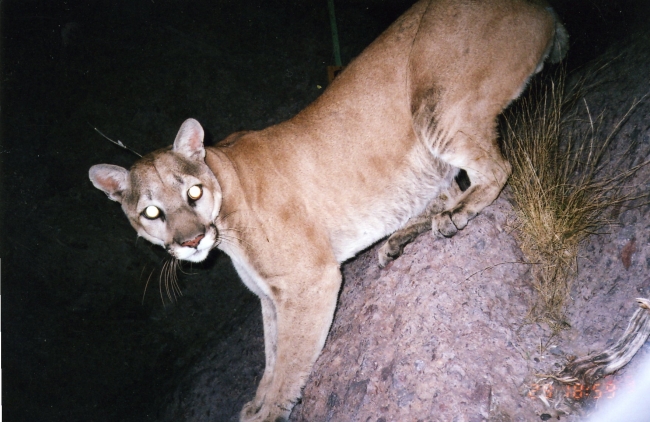
Something is happening in your yard at 2:13 every morning.
The garbage lid is crooked. The bird feeder is empty. One tomato has been bitten once and then abandoned in a way that feels disrespectful.
You could stay awake and investigate.
Or you could attach a small weatherproof surveillance device to a tree and discover that the culprit is the same raccoon you have been blaming without evidence for six months.
Trail cameras were built largely around hunting and wildlife monitoring, but they are also excellent for ordinary curiosity. They can show which animals cross a backyard, visit a water source, use a game trail, dig in mulch, inspect a compost bin, or stare directly into the lens at 3 a.m. with an unsettling understanding of technology.
The first major choice is cellular or non-cellular. A non-cellular camera stores photos and video on an SD card. You go retrieve them. A cellular camera sends images through a mobile network, usually through an app and usually with some kind of data plan.
The raccoon is not impressed either way.
1. Bushnell CORE DS-4K No Glow — For Very Serious Evidence Against the Raccoon
Bushnell’s CORE DS-4K No Glow is a non-cellular camera built around separate day and night sensors, up to 32-megapixel still images, 4K video, and no-glow infrared illumination.
No-glow matters if you are trying to observe wildlife without lighting up the yard every time something walks past.
Because it is non-cellular, there is no monthly plan. The tradeoff is that the photos stay on the camera until you retrieve the card.
For a backyard, woodlot, or property you can visit easily, that may be a feature rather than a limitation.
Sometimes it is healthy to wait twelve hours before learning the raccoon returned.
2. Bushnell CORE S-4K No Glow — One Sensor, Slightly Less Camera Philosophy
The CORE S-4K uses a single 4K sensor rather than the DS model’s dual-sensor arrangement.
It is still a no-glow SD-card trail camera aimed at high-resolution stills and video without cellular service.
This is a useful choice for people who want traditional trail-camera behavior: install camera, leave camera alone, come back later, discover 417 photographs of one squirrel.
There is an appealing simplicity to this.
No app is asking you to update firmware while standing next to a tree.
3. Browning Recon Force Elite HP5 Ultra — The 2026 SD-Card Specialist
Browning introduced the Recon Force Elite HP5 Ultra for 2026 as one of its premium non-cellular cameras.
That distinction is increasingly important. Cellular trail cameras are convenient, but a high-quality SD-card camera still makes sense where cell service is poor, subscriptions are undesirable, or you simply want the camera to take excellent photos without maintaining another account.
Browning positions the HP5 Ultra around wildlife monitoring, land management, and long-term field observation.
This is a camera for people who care enough about image quality to eventually identify individual raccoons.
That is how neighborhood disputes begin.
4. Browning Dark Ops Pro X 1080 — Invisible Night Work
The Dark Ops Pro X 1080 is another non-cellular option, with a 24-megapixel still mode, 1080p video with sound, a 100-foot detection range, 90-foot invisible infrared flash range, and a claimed 0.22-second trigger speed.
It also has a built-in 1.5-inch screen, which is surprisingly convenient when positioning a camera.
A trail camera without a screen often requires the ancient field technique of aiming it approximately where you think the animal will be and finding out three days later that you documented a branch.
The Dark Ops gives you a fighting chance.
5. Tactacam REVEAL X 4.0 — The Camera Starts Texting You
The REVEAL X 4.0 is a cellular camera with built-in GPS, automatic carrier selection, on-demand video features, and options for standard AA batteries or Tactacam’s rechargeable modular battery packs.
That means you can receive wildlife images remotely instead of physically retrieving a card.
This is wonderful if the camera is far away.
It is also how a person sitting at work can receive a phone notification that a raccoon is currently doing something more interesting than they are.
Cellular trail cameras change the rhythm of wildlife observation.
You no longer discover what happened.
You are informed.
6. Tactacam REVEAL PRO 4.0 — More Camera for People Who Have Become Trail-Camera People
The PRO 4.0 sits above the X 4.0 in Tactacam’s current lineup and is aimed at users who want higher-end image performance, battery options, app features, and remote monitoring.
For backyard use, this can be excessive.
For remote property, wildlife monitoring, or a location where checking a physical camera is inconvenient, those features become more defensible.
This is the recurring outdoor-gear problem: equipment that looks absurdly specialized until your specific problem becomes equally specialized.
You wanted to know which raccoon uses the yard.
Now you have cloud infrastructure.
7. SPYPOINT FLEX-M2 — Cellular Without Starting at the Expensive End
The FLEX-M2 is SPYPOINT’s current value-oriented cellular camera. SPYPOINT lists 32-megapixel photos, 1080p video, a 0.4-second trigger speed, and roughly 90-foot detection and flash range.
It uses dual-SIM/multi-network connectivity to select available cellular coverage.
SPYPOINT also offers a limited free monthly photo tier, with paid plans above that.
This makes the FLEX series interesting for someone curious about cellular cameras but not ready to construct a recurring monthly budget around the movements of deer.
Or raccoons.
The raccoon is already consuming enough household resources.
8. SPYPOINT FLEX-DARK — Night Photography Without the Tiny Red Announcement
The FLEX-DARK moves to 40-megapixel stills, 1080p video, a 0.3-second trigger speed, 100-foot detection/flash range, and selectable low-glow or no-glow illumination.
That lighting distinction is useful.
Low-glow infrared can produce effective night images but may show a faint visible red glow at the camera. No-glow is harder for wildlife and people to notice, though performance tradeoffs can vary by design.
For backyard wildlife, either may be perfectly adequate.
For a raccoon already demonstrating suspicious competence around latches, no-glow feels prudent.
9. SPYPOINT FLEX-S-DARK — Add Solar and Stop Visiting the Batteries So Often
The FLEX-S-DARK builds on the FLEX-DARK concept with an integrated solar panel and rechargeable battery, while retaining cellular connectivity, 40-megapixel stills, 1080p video, selectable no-glow/low-glow modes, and current app features.
This is useful for remote locations where reducing battery-service visits matters.
It is less transformative on a tree twenty feet from your kitchen.
Do not confuse “solar” with “never think about power again.” Shaded placement, winter conditions, usage and cellular activity all affect energy performance.
The sun has joined the surveillance team.
Management responsibilities remain.
10. Moultrie EDGE 2 PRO — The Cellular Camera Starts Analyzing the Situation
Moultrie’s EDGE 2 PRO is a cellular model with 40-megapixel stills, 1440p video, a 0.30-second trigger speed, and roughly 100-foot flash/detection range.
The system uses built-in memory rather than requiring an SD card, automatically connects to available major networks, and integrates with the Moultrie app. Moultrie also advertises GPS and AI-powered capture/filtering tools on the PRO model.
This is very far from the original concept of tying a film camera to a tree.
Your yard can now have remote imaging, cellular networking, GPS, and artificial intelligence.
The animal being studied is eating cat food from a bowl.
Cellular or SD Card?
For a yard, nearby acreage, or trail you visit regularly, an SD-card camera is often enough.
You avoid subscriptions, cellular setup and app dependence. The downside is obvious: you only know what happened when you physically check the camera.
Cellular makes much more sense when a camera is remote, when minimizing visits matters, or when you want notifications quickly.
Then consider flash type.
No-glow infrared is the least conspicuous at night. Low-glow may show a faint red light. White flash can produce color night images but is obviously visible.
Trigger speed matters when animals move quickly across a narrow detection zone. Detection range matters if you are watching a large clearing. Video resolution matters if you actually want video rather than merely proof that an animal existed.
Do not buy purely by megapixel count.
Sensor quality, focus, exposure, lens quality and night performance matter too. A 40-megapixel file of a blurry raccoon is still a blurry raccoon, only larger.
Finally, placement matters more than almost anything.
Mount the camera securely. Avoid pointing directly into rising or setting sun if possible. Clear nearby grass or branches that can trigger movement repeatedly. Aim across a travel route rather than directly down it when practical.
Then leave it alone.
The yard has a night shift.
You finally have management footage.
Related: Local Raccoon Insists Cooler Was Already Open · 8 Bear-Resistant Food Containers Bears Will Never Appreciate · A Bear Locker Full of Questions

Leave a Reply