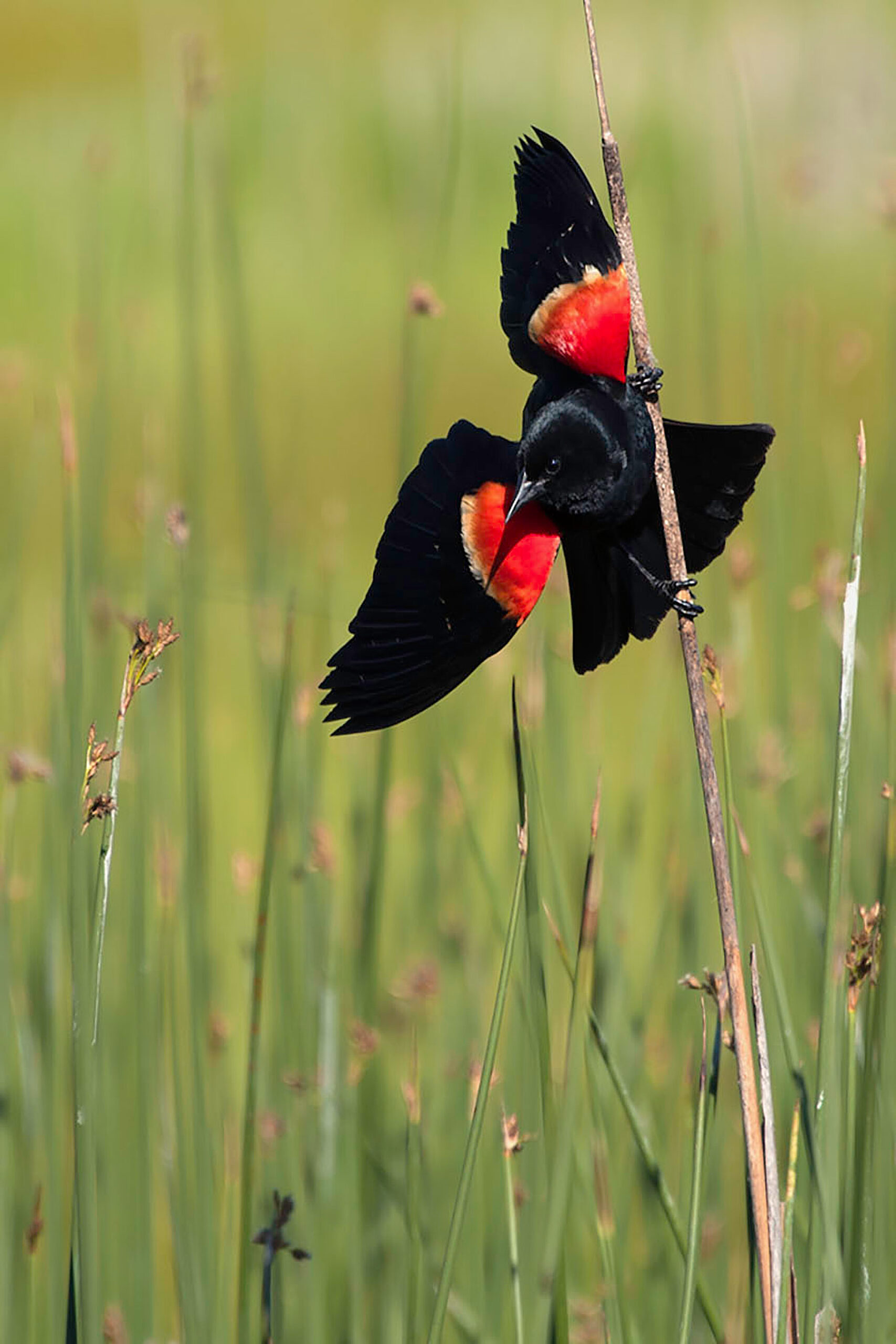
Last spring, the group’s bird expert identified everything by sound. This spring, his friend learned the call of the red-winged blackbird and has used it to identify much of the outdoors.
He hears it in a marsh and names it correctly. He hears a squeaky gate near a parking lot and names it with less success. At breakfast, a phone notification with two rising notes sends him toward the window.
Still, the improvement is real. Before learning that one call, birdsong was a single pleasant layer behind everything else. Now it contains at least two parts: the bird he knows and the many birds he does not. That is enough to make a walk feel different.
His friend offers a second sound to learn, but the beginner refuses. He wants a week to enjoy his achievement. On the next outing, they stop beside a stand of cattails. The familiar call comes from somewhere within it, followed by a second, softer sound he cannot place.
For once, nobody rushes to name it. They stand still, watch the stems move, and wait for the bird to show itself. It does not.
At home, he looks up recordings and makes a tentative guess. He leaves the sighting off his list. The next morning he walks back to the marsh, where he can now hear, with some astonishment, how many songs were there all along.
Leave a Reply