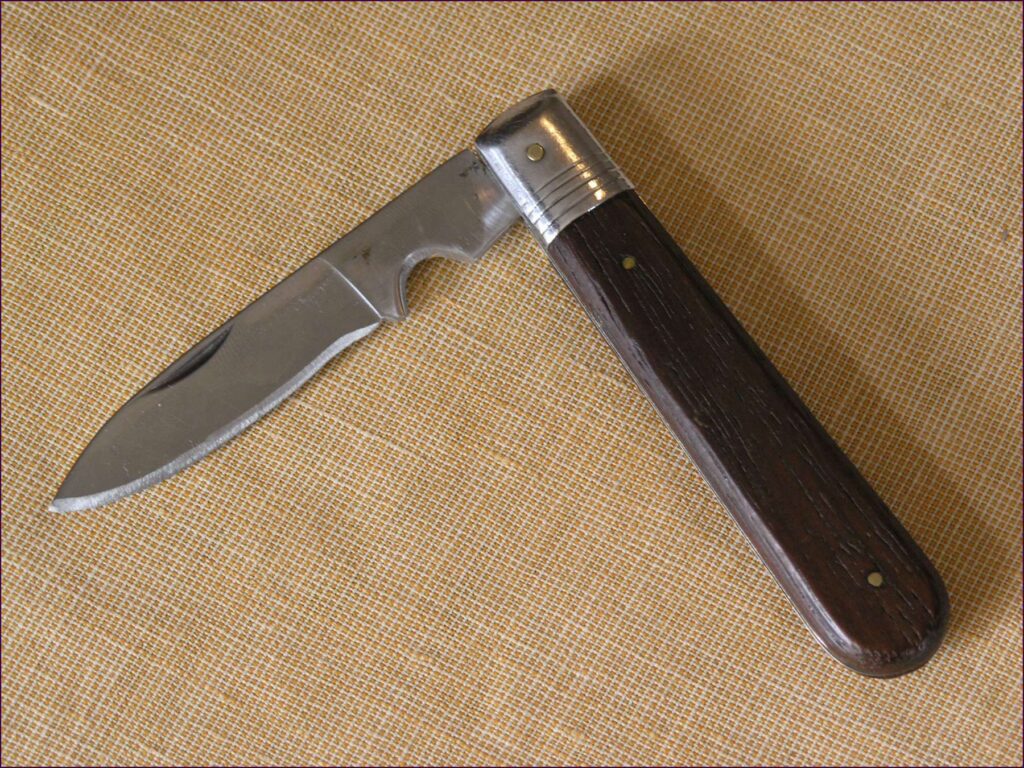
A pocket knife is one of the oldest pieces of outdoor gear still capable of making its owner feel dramatically prepared.
Perhaps you will cut cordage.
Perhaps you will shave tinder.
Perhaps you will repair equipment deep in the backcountry.
You are almost certainly going to open food packaging and slice cheese.
There is nothing wrong with this.
A compact folding knife is genuinely useful for camp chores, lunches, gardening, fishing, repairs, rope and innumerable little tasks where fingernails are insufficient technology.
Here are twelve current options, from half-ounce utility blades to premium folders whose steel specifications will eventually become a social issue.
1. Gerber LST Mini — Half an Ounce of Knife
The current LST Mini weighs about 0.5 ounces, has a blade around 1.9 inches, and closes to roughly 2.7 inches.
This is tiny.
It is for basic daily tasks, backpacking, light camp chores, packages, food prep, and people who want a blade without turning the pocket into a tool drawer.
Its great advantage is that you may actually carry it because it weighs approximately nothing.
A knife at home has exceptional edge retention and very poor field performance.
2. Opinel No. 8 Stainless — The Picnic Knife That Became Design History
The Opinel No. 8 has a stainless blade around 3.28 inches, weighs about 1.6 ounces, and uses the company’s rotating Virobloc safety ring.
The wooden handle and simple nail-nick opening make it feel closer to an old farm tool than a modern tactical folder.
That is part of the appeal.
It cuts bread, cheese, fruit, cord, and ordinary camp materials extremely well.
If your wilderness survival scenario mostly involves a baguette, the Opinel is prepared.
3. Opinel No. 8 Carbon — Same Shape, More Maintenance
The carbon-steel No. 8 uses the same classic format but swaps in XC90 carbon steel.
Carbon steel can take an excellent edge and is easy to sharpen, but it requires more attention around moisture and acidic foods because corrosion and patina are part of the relationship.
This is a useful lesson in knife ownership.
“Better steel” does not exist independently of what you are willing to maintain.
The cheese remains indifferent.
4. Swiss Army Camper — Thirteen Ways to Delay Solving One Problem
Victorinox’s Camper weighs about 2.6 ounces, closes to about 3.6 inches, and includes 13 functions: two blades, wood saw, can opener, screwdrivers, bottle opener, awl, corkscrew, tweezers, toothpick and more.
This is less a knife than a tiny committee.
It makes sense for camping because the useful task may not be cutting.
Sometimes you need to open a can, tighten a screw, cut a small branch, remove a splinter, or open a bottle whose existence was apparently overlooked during planning.
The Swiss Army Knife remains one of the few products improved by adding more tiny objects inside it.
5. Gerber Zilch — A Modern Everyday Folder Without the Luxury Tax
The Zilch weighs about 2.2 ounces and uses a blade a little over three inches long.
It has one-handed opening and a pocket clip.
This is a straightforward modern folder for people who want more blade than the LST Mini without entering premium knife pricing.
The category is full of increasingly specialized materials and mechanisms.
The Zilch reminds everyone that sometimes you need to cut a piece of string.
6. Gerber Vista Clip — Hiking Gear Meets Everyday Carry
The current Vista Clip weighs about 3.05 ounces and has a blade around 3.24 inches, with one-handed opening.
This is the ordinary full-size folding-knife slot: more handle, more blade, pocket clip, camp utility.
If you carry a knife mainly outdoors rather than as a collecting hobby, products like this are where the spreadsheet can stop.
The trail does not award metallurgy points.
7. Gerber Nectar Clip — Smaller Modern Utility
The Nectar Clip weighs about 2.33 ounces, has a roughly 2.5-inch blade, and folds to around 3.29 inches.
That smaller blade can be useful for people who want a genuinely compact everyday utility knife rather than the largest folder their pocket can legally and physically tolerate.
Blade length is not an achievement score.
Most cheese can be defeated with 2.5 inches.
8. Petzl Spatha — The Climber’s Rope Knife
Petzl designed the Spatha around climbing and rope work. REI lists it at about 1.5 ounces, with one-handed opening and a hole large enough to clip the folded knife to a carabiner.
Its blade profile is intended for rope and cordage.
This is a good example of specialization that makes sense.
If you climb, canyon, rig ropes, or work with cord regularly, the design answers a real use case.
If your main task is cutting salami, the carabiner hole will remain emotionally available.
9. Benchmade Mini Bugout — The Ultralight Knife Becomes Premium
The Mini Bugout is roughly 1.5 ounces with a blade around 2.82 inches.
It is a high-end lightweight folder with one-handed operation and premium materials.
This is for people who want a real locking pocket knife while keeping weight low.
It also demonstrates the strange economics of ultralight gear: removing ounces can add dollars.
Eventually you are paying a significant amount of money for the privilege of carrying almost nothing.
10. Benchmade Bugout — The Full-Size Ultralight Favorite
The standard Bugout family sits around 1.8 to 1.9 ounces depending on variant, with a blade around 3.2 inches.
That combination—full usable blade, very low weight, locking mechanism—is why it has become such a recognizable hiking and everyday-carry model.
There are many Bugout variants.
Do not mistake colorways and handle materials for twelve separate survival philosophies.
At heart, this is a very light folding knife.
11. Benchmade Osborne 940 — The Pocket Knife Becomes an Heirloom Purchase
The Osborne 940 family is larger, heavier, and more substantial than the Bugout, with a blade around 3.4 inches and current variants around 2.9 ounces.
It is a longstanding premium folder known for a slim profile and robust everyday utility.
This is the point in the list where “cutting cheese” becomes an aggressively insufficient explanation of the purchase.
You may still cut cheese with it.
The cheese should feel honored.
12. Opinel No. 8 Mushroom Knife — Because One Fungus Hobby Needed Its Own Blade
Opinel’s mushroom knife uses a curved roughly three-inch blade and a handle that incorporates a brush for cleaning mushrooms.
It is a magnificent piece of specificity.
The knife exists because mushroom gathering involves cutting stems and brushing soil from the harvest.
If you do not forage mushrooms, the integrated brush is largely a conversation starter.
If you do, the ridiculous specialized knife is suddenly not ridiculous at all.
This is how outdoor gear wins.
What Actually Matters in a Pocket Knife
Start with what you cut.
For food and general camp chores, a simple sharp blade may be enough.
For rope work, blade shape and one-handed access can matter. For repair tasks, a multi-tool format may beat a dedicated knife. For backpacking, weight may matter. For everyday carry, closed length and pocket comfort matter.
Steel affects corrosion resistance, edge retention, toughness and sharpening, but the most exotic steel in the world is not useful if the knife is dull.
Locking mechanisms matter for safety in certain tasks.
And laws matter.
Blade-length limits, locking-blade rules, concealed-carry restrictions and prohibited locations vary by city, state and country. Check the rules where you actually are rather than trusting a product description to function as legal advice.
Then cut the cheese.
Preparation has been achieved.
Related: 10 Emergency Radios to Purchase Immediately Before Forgetting Where You Put Them · 10 Hiking Pants to Shit Yourself In · 12 Camping Chairs for Sitting Down After Walking Somewhere to Sit Down



Leave a Reply