The national park trip begins with a photograph.
A canyon. A lake. A waterfall. A granite wall. A mountain road disappearing through trees.
Then you arrive and discover the first natural obstacle is a Toyota RAV4 waiting for a Subaru to back out.
Popular parks are trying many different ways to manage vehicle congestion: shuttles, timed entry, reserved roads, parking tags, time-limited lots, transit from gateway communities, and the ancient strategy of asking everyone to please come earlier.
These systems change.
So the most useful rule is also the least exciting: check the park’s official site shortly before the trip.
As of the 2026 season, these eleven parks illustrate why parking has become part of trip planning.
1. Zion — Park Outside the Canyon and Accept the Bus
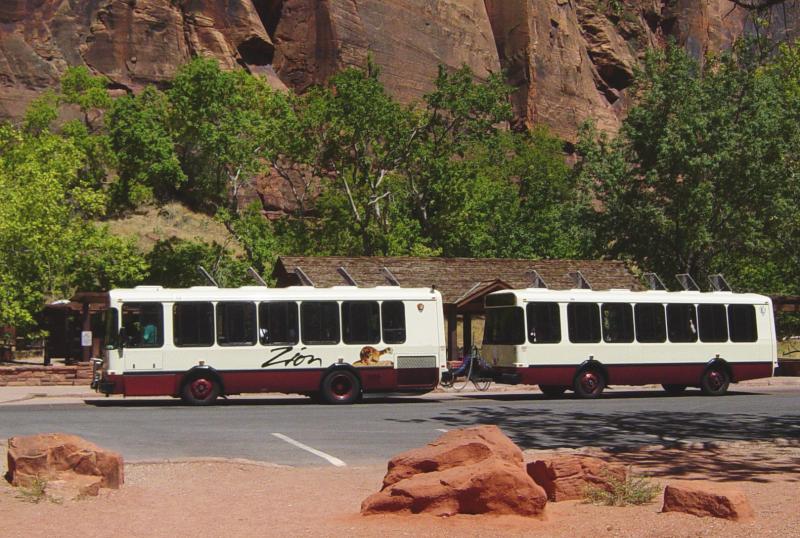
During Zion’s 2026 shuttle season, private vehicles are not allowed on Zion Canyon Scenic Drive.
Visitors park at the Zion Canyon Visitor Center or in Springdale and use the shuttle.
NPS also warns that parking fills early year-round and specifically suggests parking in Springdale when the park lot is full.
This is not really a parking inconvenience anymore.
It is a transportation system.
Once you accept this, Zion becomes much easier to understand.
The car has completed its role.
2. Rocky Mountain — A Reservation Before the Parking Lot
Rocky Mountain retained timed entry in 2026.
The Bear Lake Road Corridor permit operates during a broader daily window than the permit for the rest of the park, and the park also runs shuttle service along Bear Lake Road.
This is one of the clearest examples of access planning happening before the trip.
You are not merely deciding which trail to hike.
You are making an appointment with a mountain.
The mountain remains unaware of this arrangement.
3. Glacier — No General Vehicle Reservation in 2026, but Logan Pass Is Still a Project
Glacier made a major change in 2026: general vehicle reservations are not required.
That does not mean Logan Pass became easy.
The park moved toward a ticketed shuttle system and limited-duration parking at Logan Pass, including time limits intended to increase turnover.
This is a good warning against reading old travel articles.
“Glacier requires vehicle reservations” may have been correct in a previous season and wrong now.
The landscape is ancient.
The parking policy is not.
4. Yosemite — No Vehicle Reservation in 2026, Still Yosemite
Yosemite also dropped its 2026 timed vehicle-reservation system after reviewing 2025 traffic patterns.
That removes one planning step.
It does not create new valley floor.
Yosemite remains a heavily visited park with active traffic management, shuttle systems and parking constraints around the most popular areas.
The mistake is thinking “no reservation required” means “arrive whenever and parking will occur naturally.”
Parking is not a natural process.
5. Grand Canyon — Put the Car Down and Use the South Rim Shuttles
The South Rim is built around multiple parking lots and a substantial free shuttle network.
NPS says the four lots around the Visitor Center often fill by late morning during busy periods, and additional parking exists at Market Plaza and the historic district.
Many South Rim destinations are easier by shuttle, and some roads are seasonally closed to private cars.
In summer, the Tusayan park-and-ride shuttle can allow visitors to leave the vehicle outside the park entirely.
The canyon is one mile deep.
Somehow the stressful part is still finding Lot 3.
6. Acadia — Cadillac Has Its Own Reservation Problem
Acadia requires vehicle reservations for Cadillac Summit Road during the reservation season.
The reservation gets your vehicle onto the road.
It does not assign you a specific parking space.
This distinction is wonderful in its precision.
You have reserved the right to search for parking in a more exclusive location.
Elsewhere, the seasonal Island Explorer bus system helps reduce driving around Mount Desert Island, though Cadillac itself is not served by that bus.
Plan accordingly.
7. Arches — Timed Entry Is Gone for 2026, Parking Is Not
Arches announced that advance timed-entry reservations are not required in 2026.
NPS still warns visitors to expect entrance lines and limited parking at popular destinations during peak periods, particularly weekends and holidays.
The park recommends arriving early, staying flexible and considering less-traveled areas.
This is the recurring theme of the 2026 season:
The bureaucracy may have removed the reservation.
Geography has not added parking spaces.
8. Mount Rainier — No Timed Entry in 2026, Bring a Second Plan
Mount Rainier also dropped timed-entry reservations for 2026.
Instead, the park says it will use parking-management strategies and recommends visiting before 7 a.m. or after 4 p.m., using weekdays when possible, and identifying alternate destinations in case the first choice is full.
This is a remarkably polite way of saying the mountain is large but Paradise parking is not.
A backup trail is one of the most effective outdoor technologies ever invented.
It weighs nothing.
9. Grand Teton — Jenny Lake Has Entered the Parking Forecast Business
Grand Teton’s NPS site now provides parking information and predicted busy periods for major lots, including Jenny Lake.
The park explicitly acknowledges that visitors may circle lots repeatedly waiting for luck to change.
There is also significant 2026 construction affecting park travel.
So the correct planning unit here is no longer simply trail.
It is trail + road work + parking demand + time of day.
The Teton Range continues operating without a reservation system of its own.
10. Great Smoky Mountains — A Parking Tag Is Not a Parking Spot
The Smokies requires a parking tag for vehicles parked longer than 15 minutes.
NPS states very clearly that buying the tag does not guarantee a space.
This is important because parking demand at popular trailheads often exceeds capacity. The park lists small lots at destinations such as Grotto Falls and Chimney Tops, and it now provides information on commercial shuttle options.
The tag grants permission to park.
It does not cause parking to materialize.
This is government at its most honest.
11. Olympic — Hurricane Ridge Has a Bus for Exactly This Problem
Olympic’s Hurricane Ridge is one of those destinations where the park itself points out the hassle and stress of traffic and parking.
During the summer season, a public transit shuttle runs from Port Angeles to Hurricane Ridge.
That means the solution may be to park in town, pay a small bus fare, and let someone else drive the mountain road.
This can feel less adventurous than personally competing for a space.
It also leaves more mental energy for the actual mountains.
The Parking Lot Is Not the Park
Crowding is a real management problem.
Parking lots consume land, roads affect wildlife and habitat, idling traffic is unpleasant, and popular destinations can be loved well past their comfortable capacity.
For visitors, the practical answer is often simple:
- arrive early or late;
- use shuttles;
- know the current reservation rules;
- have an alternate trail;
- do not invent a parking space on vegetation;
- and stop circling the same twelve stalls as though the thirteenth lap has spiritual significance.
The iconic overlook is not the only place worth visiting.
Sometimes giving up on the famous lot produces the better day.
The car will recover.
Related: Counting the National Park Parking Lot · Local Goose Expands Territorial Claim to Include Entire Parking Lot · 13 Things Rangers Would Like You to Stop Doing Immediately

Leave a Reply