FICTION — Rock Ptarmigan News Service
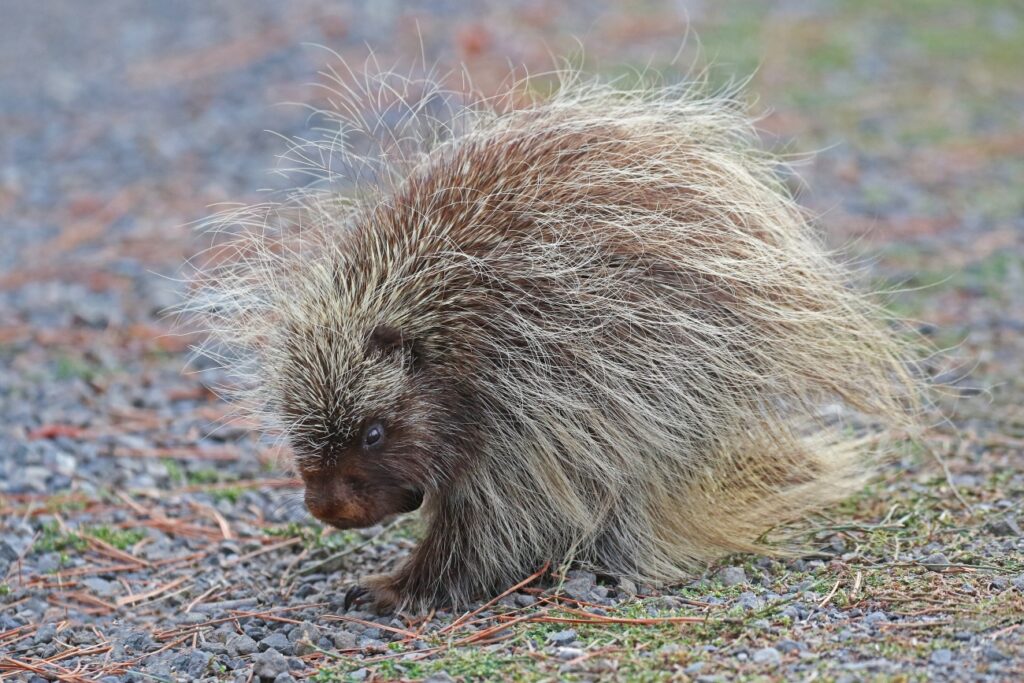
ACADIA COUNTY WILDLIFE CENTER — A North American porcupine reiterated Thursday that it cannot shoot its quills, expressing frustration that the misconception remains active despite what officials called “an extraordinary amount of available information.”
The correction came during a wildlife-center media event intended to teach visitors about native mammals.
Educator Lila Morgan had been speaking for approximately four minutes when a reporter asked how far a porcupine can fire its quills.
Morgan closed her eyes briefly.
“Zero feet,” she said.
The porcupine, seated on a low platform eating a piece of branch under staff supervision, continued chewing.
North American porcupines have thousands of specialized barbed quills.
NPS describes the quills as loosely attached specialized hairs that can dislodge when a predator or other animal makes contact. Porcupines can raise the quills and use the tail defensively.
They cannot launch them through the air.
“This has been explained for decades,” Morgan said.
A hand rose in the back.
“But if it gets really scared?”
“No.”
“What if it shakes?”
“No.”
“Could one come loose accidentally?”
“That is not shooting.”
The porcupine stopped chewing and looked toward the audience.
Observers described its expression as professionally exhausted.
Morgan turned to an enlarged quill diagram.
“Quills require contact,” she said. “That is the whole mechanism.”
The porcupine resumed chewing before she finished the sentence.
NPS notes that individual porcupines may carry around 30,000 quills. Each quill has microscopic backward-facing barbs that make it difficult to remove after embedding.
The animal does not need projectile capability.
“The system is already effective,” Morgan said.
Morgan then pointed out several other facts that have somehow attracted less public attention.
Porcupines are capable tree climbers, using long claws, textured foot pads and the tail for stability. Their large incisors can appear orange or reddish-brown because iron in the enamel strengthens the teeth for gnawing.
No attendee had previously asked whether porcupines have reinforced teeth.
Three had asked about artillery.
A second reporter asked whether porcupines are aggressive.
Morgan said they are generally slow-moving herbivores and use their quills defensively when threatened.
“They are not patrolling the forest looking for something to quill,” she said.
The porcupine resumed eating.
At 11:23 a.m., the center displayed an enlarged diagram showing the quills and their barbs.
A child in the front row raised her hand.
“So if you don’t touch it, it can’t shoot you?”
“Correct,” Morgan said.
The child nodded.
The adults continued taking notes.
The event concluded with questions about diet, climbing behavior and why porcupine teeth can appear orange.
Morgan said these were excellent questions.
As staff prepared to move the porcupine back to its enclosure, one final attendee raised a hand.
“Can hedgehogs shoot theirs?”
Morgan stared at the ceiling.
The porcupine was removed from the room.
Related: A Bear Locker Full of Questions · Area Badger Badgers Wisconsin Badgers’ Badger · Area Deer Freezes in Road to Consider All Available Options
Leave a Reply