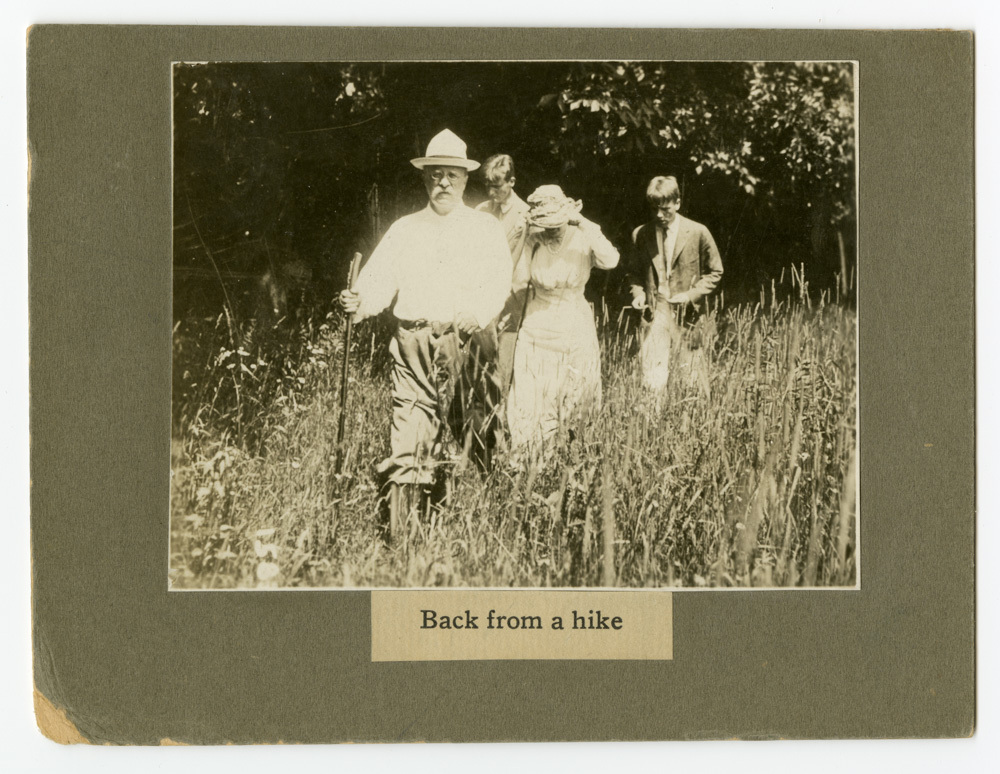
Theodore Roosevelt did not invent the outdoors.
This is worth establishing early.
People lived, worked, hunted, traveled and maintained relationships with North American landscapes for thousands of years before Roosevelt arrived with spectacles, a mustache and an unusually aggressive recreational schedule.
He also did not create American conservation alone.
The movement involved Indigenous histories, scientists, activists, hunters, foresters, politicians, women’s clubs, bird-protection campaigns and many others.
During Roosevelt’s presidency, the federal government substantially expanded national forests, wildlife reserves, parks and monuments.
He also approached outdoor life with a level of energy that makes modern “active lifestyle” branding look undercommitted.
The Personal Myth Was Partly Real
Roosevelt cultivated a public image around physical exertion.
Hunting.
Ranching.
Hiking.
Riding.
Boxing.
Camping.
Natural history.
He promoted what he called the “strenuous life,” connecting physical effort with his broader ideas about character and citizenship.
The idea reflected the values and assumptions of his era and should not be treated as neutral universal wisdom.
It is nevertheless essential to understanding Roosevelt.
He did not speak about nature from a purely administrative distance.
He spent enormous amounts of time outside and built part of his political identity around that fact.
North Dakota Changed the Story
Roosevelt went west to the Dakota Territory in the 1880s, initially to hunt bison and later to ranch.
The experience became central to his self-image.
He saw overgrazing, drought and severe winter damage.
His ranching ventures suffered major losses.
National Park Service interpretation connects those experiences with his later conservation thinking, especially his recognition that natural resources were not inexhaustible.
This is an important evolution.
Roosevelt remained a hunter and resource user.
His conservation philosophy was often about regulated, sustained use rather than simply locking nature away.
In modern terms, he occupied a mix of preservation and conservation traditions that were still being defined.
President Roosevelt Had Tools
Roosevelt became president in 1901.
During his presidency, federal conservation expanded dramatically.
NPS summarizes his record as including:
- 150 national forests;
- 51 federal bird reserves;
- four national game preserves;
- five national parks established through legislation he signed;
- 18 national monuments proclaimed using the Antiquities Act.
NPS estimates roughly 230 million acres of public land received forms of protection during his administration.
These categories are not all equivalent.
A national forest is not managed like a national park.
A bird reserve is not a monument.
The number still conveys scale.
Federal land policy changed materially under Roosevelt.
The Antiquities Act Changed What a President Could Do
Roosevelt signed the Antiquities Act on June 8, 1906.
The law authorized presidents to proclaim national monuments on federally controlled land to protect historic landmarks, structures and objects of historic or scientific interest.
Roosevelt used it quickly.
Devils Tower became the first national monument that September.
Later proclamations protected El Morro, Montezuma Castle, Petrified Forest, Chaco Canyon, Muir Woods, Grand Canyon and other sites.
This was a major shift because monument designation did not require the same legislative process as establishing a national park.
Roosevelt used the authority broadly.
Later presidents of both parties did too.
The law remains politically and legally significant today.
This article is not resolving that debate.
It is explaining why Roosevelt appears on so many conservation timelines.
Pelican Island Was Smaller and Just as Important
In 1903, before the Antiquities Act, Roosevelt created the first federal bird reservation at Pelican Island, Florida.
Feather hunting for the millinery trade had devastated bird populations.
The reserve was a federal intervention focused directly on wildlife protection.
It became a precursor to the National Wildlife Refuge System.
Roosevelt ultimately established dozens of bird reserves and game preserves.
This part of the conservation story matters because it was not only scenery.
It was habitat.
Birds.
Breeding colonies.
Animals being killed commercially.
The protection was ecological as well as visual.
Then Roosevelt Camped With John Muir
In 1903, Roosevelt traveled through Yosemite with naturalist John Muir.
They camped in Mariposa Grove, near Sentinel Dome and in Yosemite Valley.
The trip has become almost mythic in conservation history.
NPS credits their discussions with helping strengthen Roosevelt’s interest in protecting Yosemite and other landscapes.
The photographs are irresistible.
Two famous conservation figures sitting together in giant-sequoia country.
But conservation policy did not emerge from one camping trip.
The trip was symbolic because Roosevelt already had presidential authority and Muir already had a long public record of preservation advocacy.
The campsite became memorable because politics was already there.
Hunting and Conservation Were Not Opposites to Him
Roosevelt was an enthusiastic hunter.
Modern audiences sometimes find this contradictory.
Within his conservation worldview, it was not.
Many early conservationists came from hunting traditions and argued for regulated game management, habitat protection and limits on commercial slaughter.
Roosevelt helped found the Boone and Crockett Club before becoming president.
The movement contained both concern for wildlife and a strong culture of elite sport hunting.
Those histories belong together.
Do not simplify Roosevelt into either “hunter who could not be conservationist” or “nature hero whose hunting does not count.”
He was both hunter and conservation policymaker.
The tension is part of the subject.
Public Lands Were Not Empty Lands
Federal conservation in Roosevelt’s era also operated within a much longer history of Indigenous dispossession and federal control of Native lands.
National parks, forests and monuments exist on Indigenous homelands.
Some early preservation rhetoric described places as empty wilderness even when people had long lived, traveled, hunted, gathered and maintained cultural relationships there.
Roosevelt’s conservation record should therefore not be told as though the federal government merely found unused land and wisely protected it.
The policy achievements were real.
So were the histories that made federal ownership possible.
Both facts belong in the same article.
The Outdoors as Government Policy
The policy record is not simply a story about a president who liked hiking.
He helped make conservation a larger federal responsibility.
Forests became managed reserves rather than assumed inexhaustible timber inventories.
Wildlife refuges expanded.
Scientific management became institutional.
Monuments created a new preservation tool.
Public-land protection became a routine subject of executive and congressional action.
Those actions became part of an institutional structure that later administrations, Congresses, agencies, tribes, states and courts expanded, changed and contested.
The modern public-lands system is not Roosevelt’s creation alone.
Please Go Outside, Probably Immediately
The joke in the headline works because Roosevelt seems constitutionally unable to remain indoors.
He wrote.
Read voraciously.
Ran government.
Raised a family.
Traveled.
Gave speeches.
Hunted.
Rode horses.
Camped.
Boxed.
Explored.
And somehow found time to create enough public land categories that historians require tables.
This does not make every part of his ideology admirable or transferable to the present.
Historical figures are not equipment recommendations.
Roosevelt’s conservation record is documented in the policy changes his administration made.
He did not merely say nature mattered.
His administration changed how the federal government treated enormous areas of land and wildlife habitat.
Then, whenever possible, he went outside into some of it.
Related: John Wesley Powell Had One Arm and a Terrible Idea About the Colorado River · The Wolverine: 40 Pounds of Absolutely Not · The American Badger Has Had Enough of This
Leave a Reply